Expertise
Bulk materials are tricky. So are we.
Difficult materials call for experienced engineers. Over 35 years of practice with more than 150 types of bulk material, from explosive to fragile.
01 Bulk Materials
Every material has its quirks
Bulk materials rarely behave as expected. Some explode, others cake, and others destroy themselves during transport. We know the particularities of more than 150 materials and have developed the right solution for each one.
02 Processes
Processes and plant types
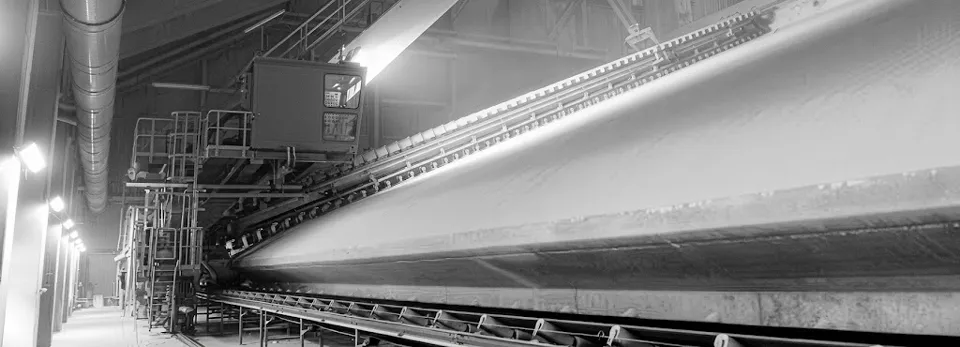
From pneumatic conveying and mechanical conveying systems to silo plants and complete bulk material logistics: We master the entire spectrum of mechanical process engineering. Projects up to €50 million are supported through all planning stages; smaller plants up to €1 million are delivered turnkey.
Pneumatic conveying
Vacuum and pressure conveying, dilute-phase conveying, dense-phase conveying for gentle transport, inert gas circulation systems for dust-explosive materials. Throughputs from 50 kg/h to 300 t/h, conveying distances up to 1 km.
Mechanical conveying
Bucket elevators for vertical transport, rotary valves as material airlocks, vibrating conveyor troughs for metered discharge, vibrating screens for foreign-object separation and much more, designed for the specific flow behaviour of each material.
Silo plants
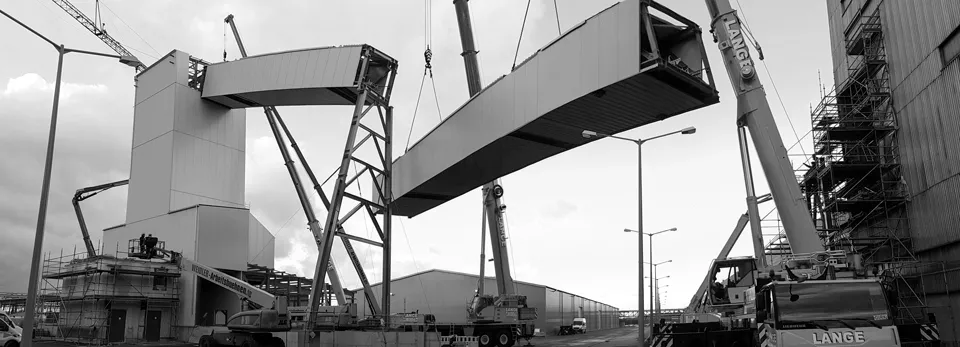
Storage of bulk materials in flat-bottom and high-bay silos, aluminium silos and steel halls. Discharge systems with anti-stick coating, steep hopper geometry and trace heating for poorly flowing materials. Delivered with up to 80,000 cubic metres of storage capacity.
Dedusting
Filter systems and clean-gas ducting for dust separation, silo-top filters for clean exhaust air during filling, ATEX-compliant designs for dust-explosive materials. Filtered dust is returned to the process wherever possible.
Processing
Granulation plants for compacting and conditioning, screening tower plants for classification, mixing plants for salts and minor components with dosing and weighing technology, dedusting and conditioning plants as part of complete processing lines.
Loading & logistics
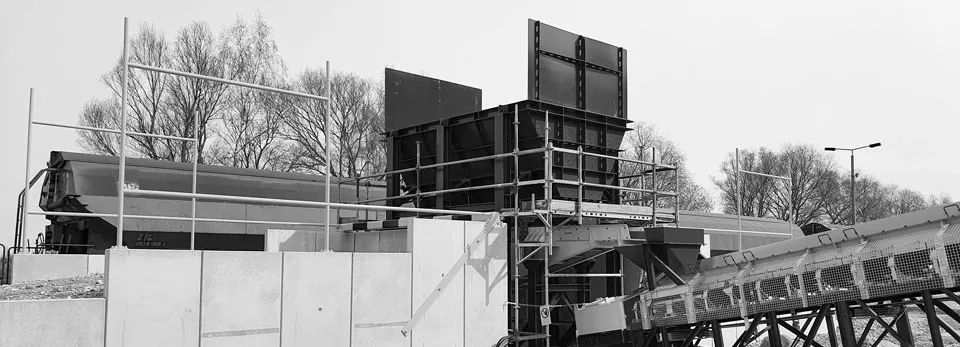
Ship, wagon and truck loading and unloading, big-bag emptying and filling stations, in-plant conveying systems. Planning of complete logistics concepts from goods receipt through to loading.
03 Industries
Eight industries. One standard.
We encounter bulk materials in almost every industry, in food production as much as in refineries, in power plants as much as in chemical plants. What changes from industry to industry: the material, the safety requirements, the operating conditions. What doesn’t change: the care with which we design every plant.
Fertilisers such as ammonium sulphate chemically attack plant components while also tending to stick. This combination requires corrosion-resistant materials and anti-stick coatings in equal measure.
Sand, gravel, cement, anhydrite, dolomite and gypsum are highly abrasive and place particular strain on conveying and wear parts. Mineral raw materials are often damp and sticky as well. We design plant components for a long service life and safeguard material flow with robust discharge systems and anti-stick coatings.
Plastic granulates have to be conveyed gently so that grain size and material quality are preserved. Fines and abrasion dust are also explosive and call for an ATEX-compliant plant design.
Silicic acid and nickel catalysts are corrosive and toxic substances that require ATEX-compliant plants with chemical-resistant materials. All components are designed for the specific attack potential of the material.
Foodstuffs such as nougat pillows, cereal grains or pellets require gentle conveying. Hygiene requirements and the avoidance of product breakage are at the forefront of every plant design. Sugar and flour dusts are also explosive and call for an ATEX-compliant design.
Coal dust, lignite and other fuels pose an explosion hazard when airborne. We implement complete explosion protection to the ATEX directive for the entire plant.
Recycled material and refuse-derived fuel occur as a changing mixture of different shapes and sizes. Our plants are designed for this unpredictability.
Media such as lime and solid sulphur are chemically aggressive, and solid sulphur is explosive when airborne. In hazardous areas they call for ATEX-compliant plants with resilient materials for safe continuous operation.
Why CEC
No supplier. No manufacturer.
Only your requirements.
Talk to us
Whether new build, optimisation or feasibility study: We work with you to clarify what is technically sound and economically viable.
Get in touch now